Flux Sanity Site is a deliberately small marketing-site build with one focus: turning polished comps into a CMS-driven landing-page system that non-engineers can extend.
The brief
This build targets a modern marketing-site stack (Next.js, React, TypeScript, Tailwind, Sanity, Vercel, reusable landing-page templates, and ongoing technical SEO) instead of another generic SaaS homepage.
The public site is a Flux Graph marketing brand built end to end. The repo is the proof: a typed content model, Sanity Studio route, reusable section renderer, fallback content, preview wiring, generated metadata, sitemap, robots, and JSON-LD.
What I built
- CMS page model: pages own title, slug, SEO fields, and an ordered array of reusable sections.
- Reusable sections: hero, logo strip, feature grid, split visual, testimonials, pricing, FAQ, and CTA.
- Sanity integration: embedded Studio at
/studio, App Router data layer, Draft Mode route, Visual Editing wiring, and TypeGen output. - Fallback content: the site still builds and renders without Sanity credentials, which makes portfolio review reliable.
- SEO surface: per-page metadata, canonical URLs, Open Graph/Twitter fields, sitemap, robots, FAQ schema, and product/organization JSON-LD.
Product and design pass
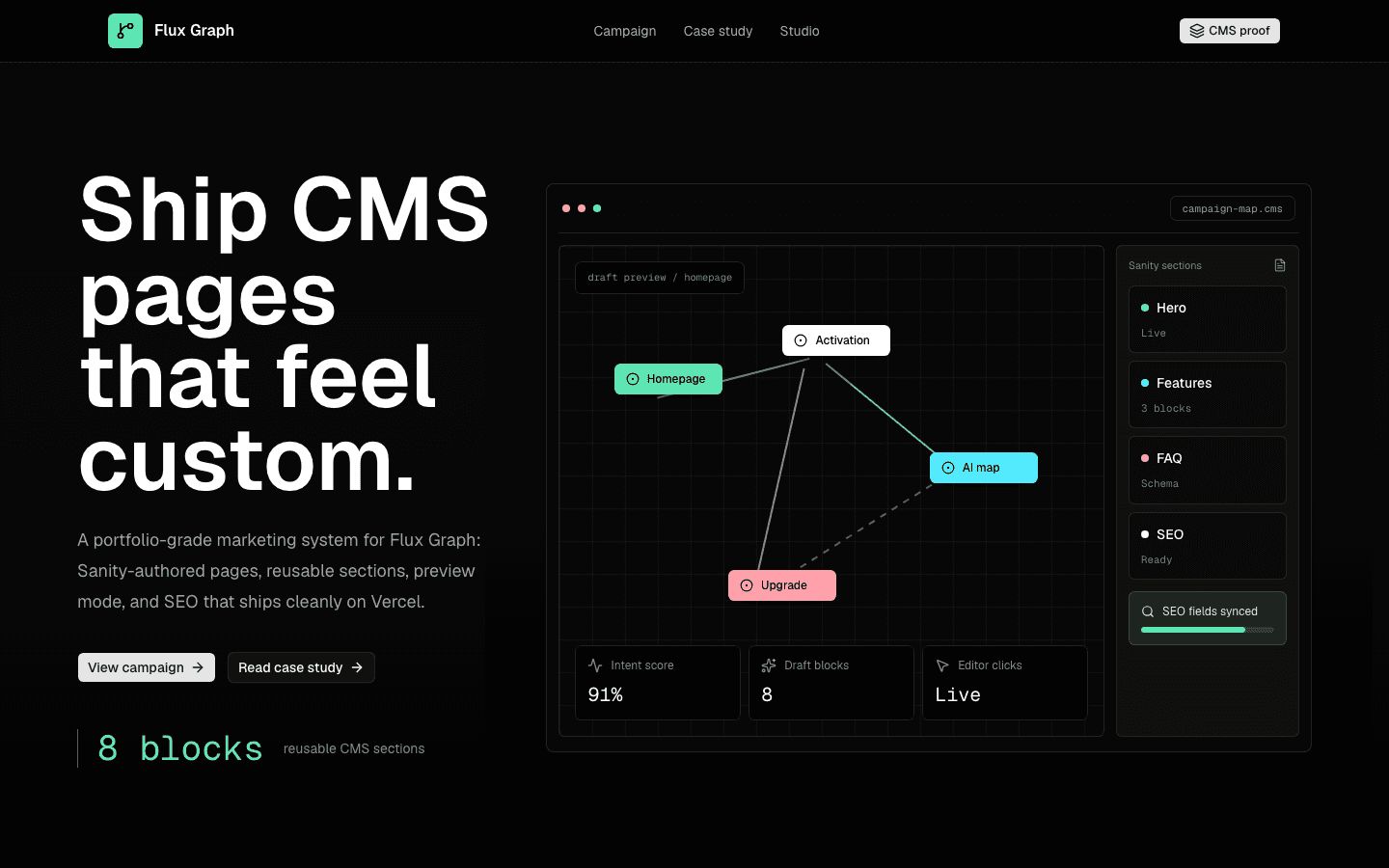
The first version proved the integration but felt too much like a template. I tightened the hero copy, gave the product mockup more weight, added a CMS section rail inside the visual, and made the lower page rhythm less card-heavy.
The real point is that a marketer could assemble new pages while the frontend still feels authored, responsive, and brand-consistent.